
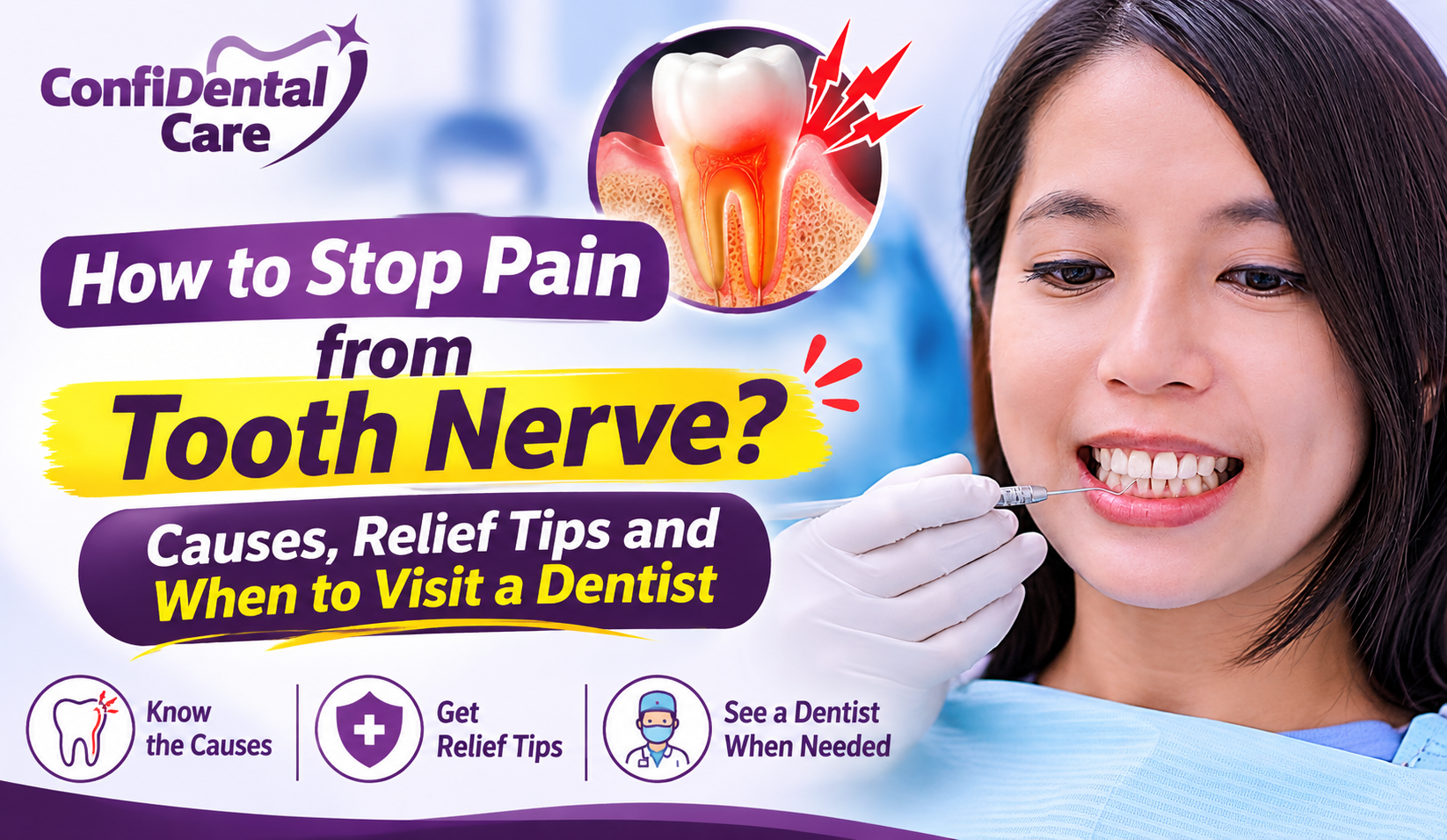
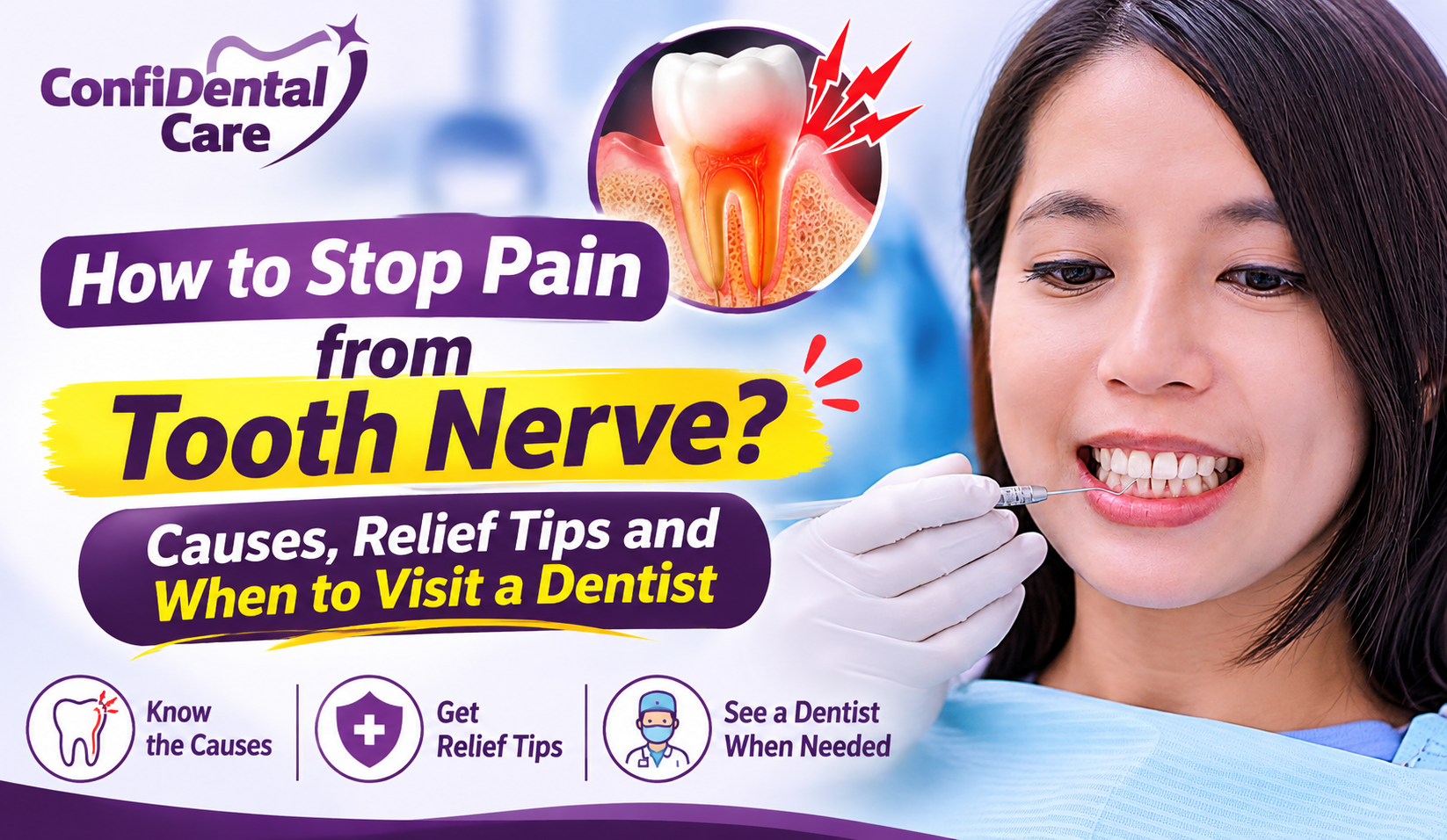
How to Stop Pain from Tooth Nerve: Causes, Relief Tips and When to Visit a Dentist

Tooth nerve pain can be extremely uncomfortable and may interfere with eating, sleeping and everyday activities. It often feels like a sharp, throbbing or sudden electric shock inside the tooth. The discomfort may become worse when consuming hot or cold food and drinks. Understanding how to stop pain from tooth nerve is important, but identifying the underlying cause is equally essential for long-term relief.
What Causes Tooth Nerve Pain?
Tooth nerve pain usually occurs when the sensitive inner part of a tooth, known as the dental pulp, becomes irritated or inflamed. Several dental problems can trigger this condition, including:
-
Tooth decay: Deep cavities can reach the inner layers of the tooth and affect the nerve.
-
Cracked teeth: Small cracks may expose sensitive areas and cause discomfort while chewing.
-
Dental infections: Bacterial infections can lead to inflammation around the tooth root.
-
Gum recession: Exposed tooth roots can increase sensitivity.
-
Damaged fillings: Worn or broken fillings may allow bacteria to enter the tooth.
Identifying the cause helps a dentist recommend the most appropriate treatment.
How to Stop Pain from Tooth Nerve at Home
If you are experiencing tooth nerve pain, a few temporary measures may help manage discomfort until you can visit a dentist.
1. Rinse with Warm Salt Water
Mix half a teaspoon of salt in a glass of warm water and gently rinse your mouth. This can help keep the affected area clean and soothe irritated gums.
2. Apply a Cold Compress
Place a cold compress against the outside of your cheek for around 15–20 minutes. It may help reduce swelling and temporarily relieve discomfort.
3. Avoid Very Hot or Cold Foods
Extreme temperatures can trigger sensitive dental nerves. Choose soft foods and avoid anything that causes additional pain.
4. Maintain Gentle Oral Hygiene
Continue brushing with a soft-bristled toothbrush and clean between your teeth carefully. Avoid putting pressure on the painful area.
5. Consider Suitable Pain Relief
Over-the-counter painkillers, such as paracetamol or ibuprofen, may help when used according to the packet instructions and if suitable for you. Never place aspirin directly against your tooth or gums, as it can damage the tissue.
Remember, these methods offer temporary relief and cannot repair an infected or damaged tooth nerve.
Professional Treatments for Tooth Nerve Pain
When home remedies are not enough, professional dental treatment may be necessary. Depending on the diagnosis, your dentist may recommend:
-
Dental fillings: To repair cavities and prevent further decay.
-
Root canal treatment: To remove infected or inflamed pulp, clean the root canals and seal the tooth.
-
Dental crowns: To protect a weakened or damaged tooth.
-
Tooth extraction: In cases where the tooth cannot be restored.
A dental examination and, when necessary, an X-ray can help determine the correct treatment.
When Should You Visit a Dentist?
Do not ignore persistent, severe or recurring tooth pain. Seek urgent dental advice if you experience swelling, fever, pain when biting or a bad taste in your mouth. Facial or neck swelling, or difficulty breathing or swallowing, requires immediate emergency medical attention.
Get Professional Help for Tooth Nerve Pain
Knowing how to stop pain from tooth nerve can help you manage discomfort temporarily, but lasting relief depends on treating the underlying dental problem. Early diagnosis can prevent complications and help protect your natural teeth.
For further information about managing severe tooth nerve pain and available treatment options, read this helpful guide from ConfiDental Care.
Taking care of your oral health today can help you avoid more serious dental problems tomorrow.


