
Why Your Computer Loses Sound After a System Update
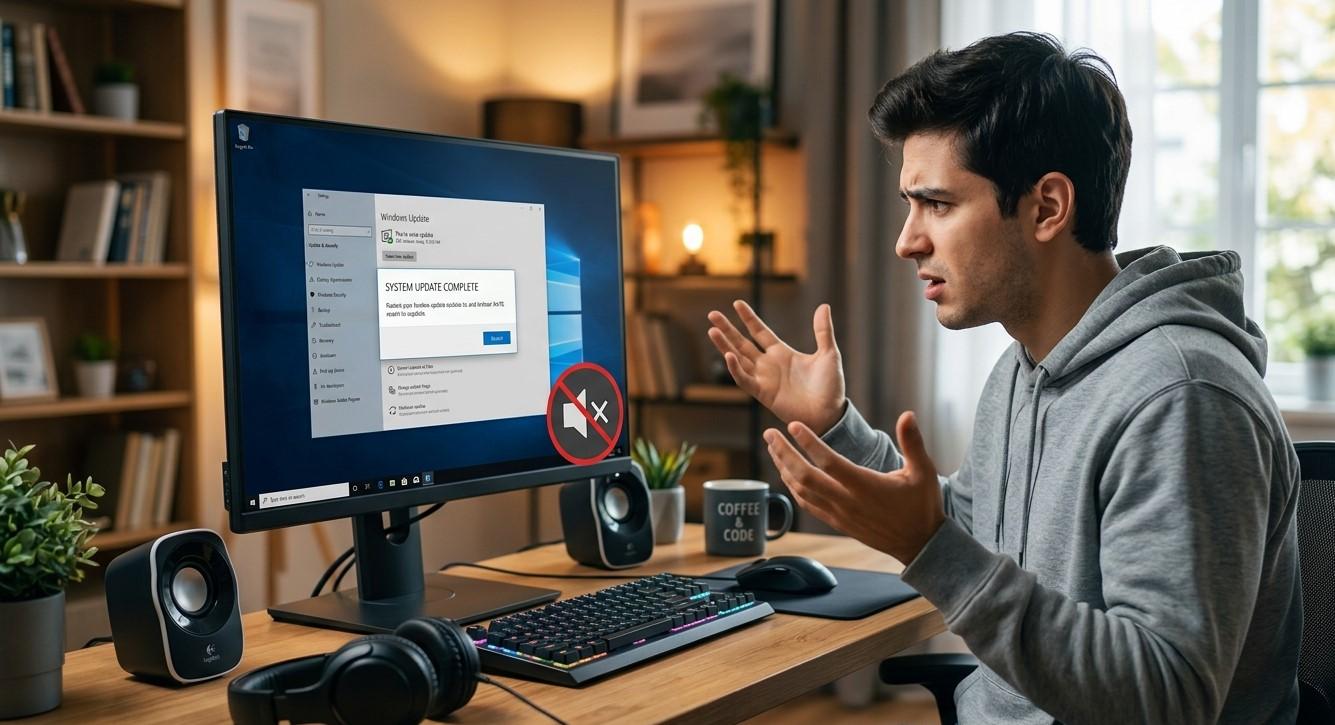
A system update is designed to improve your computer by adding security patches, fixing bugs, improving compatibility, and introducing new features. However, updates can sometimes cause unexpected problems, including a complete loss of sound. You may notice that your speakers suddenly stop working, headphones are no longer detected, or the volume icon shows an error after an update.
Audio problems following a system update are often related to drivers, incorrect output settings, disabled audio devices, or compatibility issues. Fortunately, many of these problems can be resolved with basic troubleshooting. If the sound remains unavailable after trying common solutions, professional computer repair Albany, laptop repair Albany, and computer repair Albany NY services can help identify whether the issue is software- or hardware-related.
Why Does Sound Stop Working After an Update?
Operating system updates can change system settings, replace drivers, or modify how hardware communicates with the computer. Your audio system depends on several components working together, so a change in one area can cause sound problems.
Common causes include:
- Incorrect audio output selection
- Outdated or incompatible audio drivers
- Disabled audio devices
- Driver installation errors
- Muted applications
- Audio service problems
- Bluetooth connection issues
- Hardware compatibility problems
- Damaged system files
Identifying the specific cause is important because reinstalling drivers unnecessarily may not solve a problem caused by an incorrect output setting.
1. Check the Volume and Mute Settings
Before performing advanced troubleshooting, check the basic volume controls.
Make sure the computer isn't muted and that the volume level is high enough to hear.
Also check the volume settings within the application you're using. Some programs have their own volume controls that operate independently of the main system volume.
For example, if you can hear notification sounds but a particular video application produces no audio, the issue may be limited to that application.
2. Check the Selected Audio Output
One of the most common causes of missing sound after an update is an incorrect output device.
Your computer may have several possible audio outputs, including:
- Built-in speakers
- Headphones
- HDMI audio
- DisplayPort audio
- Bluetooth speakers
- USB audio devices
An update may change the default audio output.
Open the system's sound settings and verify that the intended speakers or headphones are selected as the output device.
If you're using a monitor connected through HDMI or DisplayPort, the computer may accidentally route sound through the monitor instead of the built-in speakers.
3. Restart the Computer
A simple restart can sometimes resolve temporary audio problems.
System updates may install new components that don't function correctly until the computer has been restarted.
Restart the computer normally and test the sound again.
If the audio returns after restarting but disappears later, the problem may involve a driver, background service, or device configuration.
4. Check the Audio Driver
Audio drivers allow the operating system to communicate with the computer's sound hardware.
After an update, an existing driver may become incompatible, corrupted, or replaced with a generic driver.
Possible symptoms include:
- No sound
- Missing audio device
- Distorted sound
- Crackling
- Headphones not detected
- Audio devices repeatedly disconnecting
Check the computer's device-management settings for the audio hardware.
If the driver shows an error, updating or reinstalling the appropriate driver may resolve the problem.
For the best compatibility, obtain drivers from the computer manufacturer's official support resources or the hardware manufacturer's legitimate support page.
5. Consider Rolling Back a Problematic Driver
If sound stopped working immediately after a driver change, reverting to a previous compatible driver may help.
This is particularly useful when the new driver introduces a compatibility problem with the specific computer model.
However, driver changes should be made carefully. Installing random drivers from unofficial websites can create additional stability and security problems.
If you're uncertain which driver version is appropriate, professional assistance can save time and prevent further configuration problems.
6. Check Whether the Audio Device Is Disabled
An audio device may become disabled during or after a system update.
Open the computer's sound or device-management settings and check whether the speakers or other audio hardware are enabled.
If the device is disabled, enabling it may immediately restore sound.
Also check whether the computer recognizes the audio hardware at all. If the device is completely missing, the problem may involve drivers, hardware detection, or a deeper system issue.
7. Restart Audio Services
Operating systems use background services to manage audio functions.
If an audio service fails to start correctly after an update, the computer may appear to have no sound even though the hardware itself is working.
Restarting the relevant audio services can sometimes restore functionality.
However, avoid changing unrelated system services. If you're unsure which service controls audio, use built-in troubleshooting tools or seek professional assistance.
8. Test Headphones or Another Speaker
Testing another audio device can help determine whether the problem is with the computer or the original speaker or headphones.
Try connecting:
- Wired headphones
- Another pair of speakers
- A USB audio device
- Bluetooth headphones
If one device works while another doesn't, the issue may be limited to the original accessory.
If no audio device works, the problem is more likely related to the operating system, drivers, settings, or computer hardware.
9. Check Bluetooth Audio Devices
Bluetooth headphones and speakers can become disconnected after system updates.
Check whether Bluetooth is enabled and whether the audio device is still paired.
You may need to disconnect and reconnect the device or remove and pair it again.
Also verify that the Bluetooth device is selected as the active audio output.
If Bluetooth works for other devices but not the audio accessory, compatibility or device-specific settings may be involved.
10. Run Built-In Audio Troubleshooting
Modern operating systems often provide built-in troubleshooting tools designed to identify common sound problems.
These tools may check:
- Output device selection
- Audio services
- Driver problems
- Disabled devices
- Common configuration errors
Run the available audio troubleshooter and follow its recommendations.
While automated troubleshooting cannot identify every hardware problem, it can resolve simple configuration issues without requiring advanced technical knowledge.
11. Check for Hardware Problems
If software troubleshooting doesn't restore sound, hardware may be involved.
Potential hardware problems include:
- Damaged speakers
- Faulty headphone ports
- Defective audio components
- Damaged USB audio devices
- Motherboard-related problems
- Physical damage
If the computer lost sound immediately after an update but also has other hardware symptoms, the update may simply have exposed an existing hardware problem rather than directly causing it.
When Should You Contact a Professional?
Professional assistance may be useful when the computer continues to have no sound after basic troubleshooting.
Consider professional diagnosis if:
- The audio device isn't detected.
- Drivers repeatedly fail.
- Multiple audio outputs don't work.
- Sound problems continue after reinstalling drivers.
- The headphone port appears damaged.
- The computer has additional hardware problems.
- Sound disappears after every restart.
- The issue affects several applications.
Professional computer repair Albany technicians can inspect drivers, system settings, audio hardware, ports, and operating system components.
For laptop users, laptop repair Albany specialists can also examine built-in speakers, headphone ports, internal audio components, and other hardware.
If you're searching for computer repair Albany NY, professional diagnostics can determine whether the problem is caused by the update, a driver conflict, incorrect settings, or hardware failure.
How to Prevent Audio Problems After Future Updates
A few precautions can make system updates safer.
Before major updates:
- Back up important files.
- Create a system recovery option when available.
- Record important hardware and driver information.
- Close unnecessary applications.
- Make sure the computer has sufficient storage space.
- Install updates from official sources.
After an update, test important functions such as speakers, headphones, Bluetooth, Wi-Fi, and external devices.
If a problem appears, noting exactly when it started can make troubleshooting easier.
Conclusion
Losing sound after a system update can be frustrating, but the problem is often caused by a change in audio output settings, driver compatibility, disabled devices, audio services, or Bluetooth configuration. Start with basic checks such as volume, output selection, restarting the computer, and testing another audio device. If necessary, investigate drivers and system settings before considering hardware failure.
If the problem continues, avoid repeatedly installing random drivers or making unnecessary system changes. A professional diagnosis can identify the actual cause and prevent additional complications.
Whether you need computer repair Albany, laptop repair Albany, or computer repair Albany NY, experienced technicians can troubleshoot audio drivers, operating system settings, ports, speakers, and other components. Addressing sound problems properly can restore your computer's audio functionality and help ensure that future system updates don't leave you without reliable sound.

 English
 Arabic
 French
 Spanish
 Portuguese
 Deutsch
 Turkish
 Dutch
Dutch
 Italiano
 Romaian
 Portuguese (Brazil)
 Greek
Greek