
How Smart Office Automation Is Transforming Commercial Real Estate
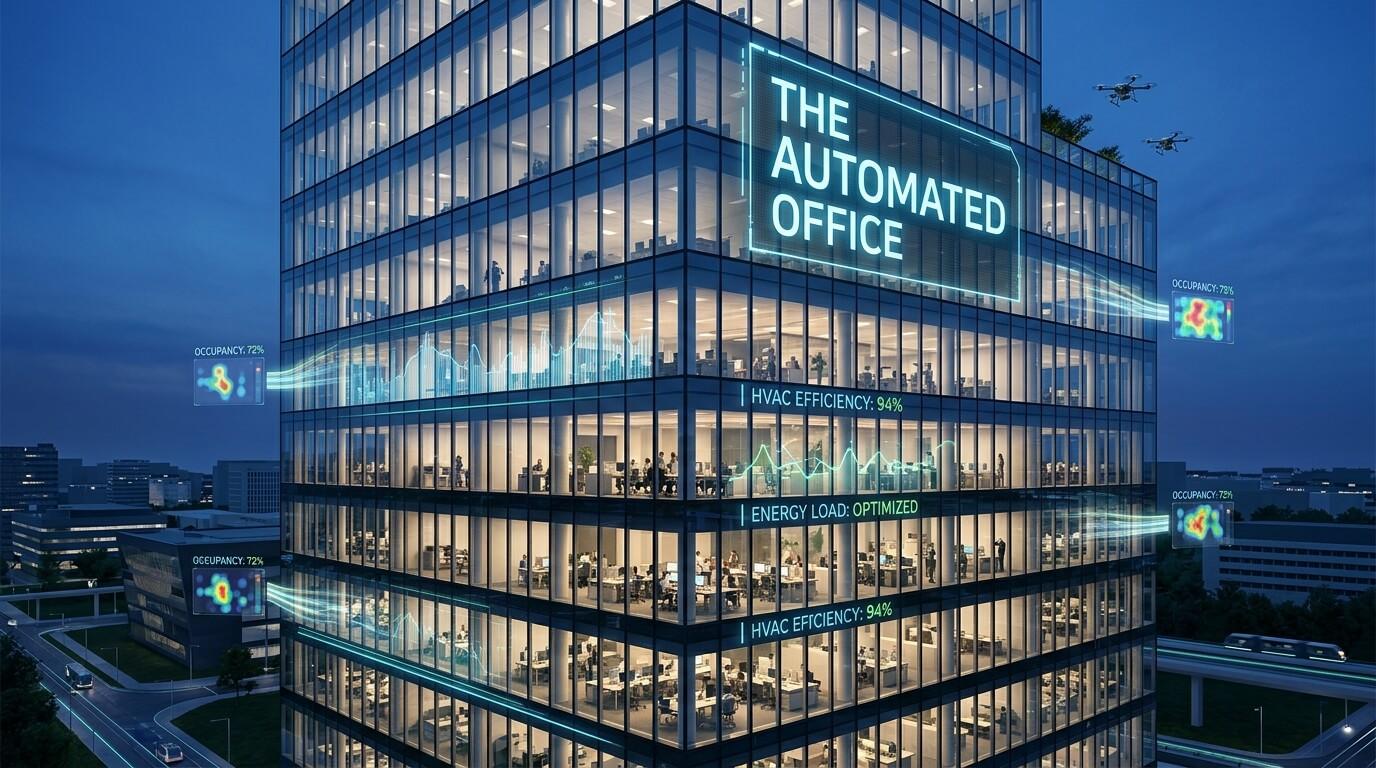
The commercial real estate (CRE) landscape has undergone a seismic shift in recent years. As hybrid work models become permanent fixtures and sustainability mandates tighten, traditional office spaces face unprecedented pressure to adapt. Static floor plans and manual building management systems are quickly becoming relics of the past.
Taking their place is smart office automation an ecosystem of connected technologies, Internet of Things (IoT) sensors, and artificial intelligence designed to optimize workspace performance. Far from being a mere tech upgrade, office automation is fundamentally transforming commercial real estate from a static physical asset into an agile, data driven service.
1. Data Driven Space Utilization and Dynamic Layouts
One of the greatest challenges facing CRE landlords and corporate tenants today is underutilized footprint. Paying for empty square footage erodes profit margins, yet predicting daily attendance in a hybrid work environment is notoriously difficult.
Smart office systems solve this through occupancy tracking and desk booking sensors. By deploying privacy compliant IoT sensors under desks, in meeting rooms, and along hallways, building managers gain real time visibility into how space is actually used.
-
Hot desking Efficiency: Employees reserve workstations dynamically via mobile apps.
-
Right Sizing Portfolios: Analytics reveal peak usage hours, allowing companies to consolidate leases without sacrificing capacity.
-
Automated Meeting Rooms: Rooms auto release if booked attendees fail to show up within 10 minutes.
Instead of guessing spatial needs, real estate managers can use empirical data to redesign floor plans, swap unused cubicles for collaborative lounges, and maximize yield per square foot.
2. Dynamic Energy Management and Reduced Operational Costs
Energy costs represent one of the largest operating expenses for commercial properties. Traditional commercial HVAC and lighting systems run on rigid, pre programmed timers often cooling empty boardrooms or lighting vacant floors for hours.
Smart automation shifts building infrastructure from reactive to predictive:
-
Automated HVAC Optimization: AI driven climate control monitors indoor air quality, ambient weather, and room occupancy to adjust heating and cooling dynamically.
-
Smart Daylight Harvesting: Automated blinds and dimmable LED systems adjust artificial lighting based on incoming natural sunlight, reducing electrical overhead.
-
Predictive Energy Scheduling: Buildings cool or heat high density zones ahead of schedule based on digital calendar bookings and historical entry data.
According to research from Fortune Business Insights, the global smart office market is expanding rapidly as commercial property owners prioritize automated building management to achieve net zero targets and lower operating expenses.
3. Elevating Tenant Experience and Retention
In a tenant centric market, property managers can no longer rely solely on location to attract premium leases. The modern workplace must offer a frictionless, comfortable environment that employees actually want to visit.
4. Predictive Maintenance and Asset Preservation
Unplanned equipment downtime such as a central chiller failure during mid summer can cost property managers thousands in emergency repairs and tenant concessions. Smart automation replaces traditional "break fix" models with predictive maintenance.
Vibration sensors, thermal monitors, and IoT flow meters continuously feed performance metrics from critical building infrastructure into a centralized management dashboard. Machine learning algorithms detect subtle anomalies like a minor motor fluctuation or pressure drop weeks before hardware fails. Facilities teams receive automated work orders to service equipment during scheduled off hours, extending asset lifespans and maintaining property valuations.
FAQs
1. What are the most cost effective smart automation upgrades for a CRE property?
The fastest return on investment typically comes from smart lighting and automated climate control (HVAC). Because energy represents one of the highest variable operating costs in commercial property, implementing automated sensors and AI thermostats can yield noticeable utility bill reductions within the first few months.
2. How does smart office technology impact building cybersecurity?
Connecting facility infrastructure to the internet introduces potential network vulnerabilities if not managed properly. To safeguard building management systems (BMS) and tenant data, smart offices utilize enterprise grade encryption, segregated IoT networks, and regular automated software updates to prevent unauthorized network entry.
3. How does workplace occupancy analytics protect employee privacy?
Modern occupancy sensors utilize heat mapping, optical beam breaks, or anonymized spatial telemetry rather than facial recognition or identifiable cameras. This allows facility managers to track density and utilization metrics accurately without capturing or storing any personal employee data.
4. How does smart automation contribute to corporate sustainability and ESG goals?
Automated systems directly track and optimize energy, water, and HVAC usage, allowing property owners to collect real time data on carbon emissions. This automated reporting makes it significantly easier to achieve green building certifications like LEED or BREEAM and satisfy strict Environmental, Social, and Governance (ESG) compliance requirements.
5. Will smart office automation eliminate the need for property management teams?
No. Automation is designed to augment property managers, not replace them. By automating repetitive monitoring and routine operational tasks, building management teams can shift their focus toward strategic asset planning, tenant relationship management, and high value maintenance needs.
The Path Ahead: Upgrading CRE for the Digital Era
Smart office automation is no longer a luxury amenity reserved for trophy high rises it is becoming a baseline expectation across commercial real estate. By integrating IoT infrastructure, automated energy controls, and predictive workplace analytics, property owners can future proof their buildings against market fluctuations, lower operational costs, and deliver superior workspace experiences.
For CRE investors and developers, the message is clear: the future of commercial real estate belongs to smart, automated environments.

 English
 Arabic
 French
 Spanish
 Portuguese
 Deutsch
 Turkish
 Dutch
Dutch
 Russian
 Romaian
 Portuguese (Brazil)
 Greek
Greek