
Which Details Should Brands Check With Zhuoerya New Cosmetic Brush Factory
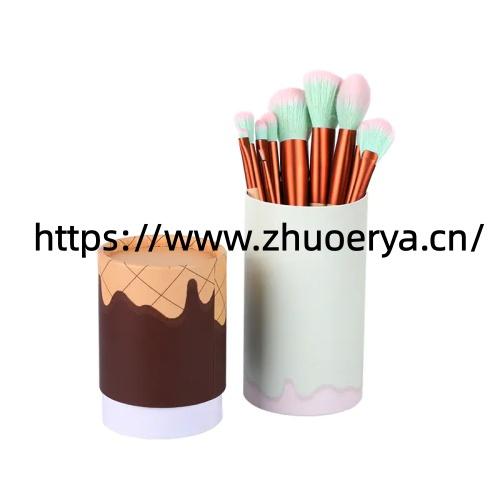
New Cosmetic Brush Factory selection can influence how smoothly a beauty product moves from an initial concept to a finished retail item. Brands should look beyond a quotation and examine materials, construction, customization, sampling, packaging, production communication, and quality procedures. Current industry sourcing guidance also places emphasis on documented specifications, approved samples, material choices, and inspection criteria before bulk production begins.
The first thing to consider is product suitability. A brush intended for foundation does not necessarily require the same fiber structure or shape as one designed for powder, blush, contouring, or eye application. Buyers should define the intended function before discussing specific components. This makes it easier to compare different proposals and prevents unnecessary features from entering the design.
Fiber selection deserves careful attention. Softness is important, but it is only one part of the overall experience. Density, length, flexibility, shape retention, and product pickup can all affect application. A sample allows buyers to evaluate these characteristics directly instead of relying only on photographs or descriptions. It is also useful to check whether the fibers remain properly positioned after repeated handling and cleaning.
The connector between the brush head and handle should also be reviewed. Buyers can inspect alignment, surface finish, attachment strength, and overall appearance. The handle itself should be assessed for length, weight, shape, coating, color, and grip. Small differences in these areas can change how a brush feels in the hand. For a collection containing several styles, maintaining a consistent visual language can also make the range easier for customers to recognize.
Customization is another important area. Beauty brands may want specific handle colors, logo placement, fiber configurations, ferrule finishes, brush shapes, or set combinations. Some projects involve simple branding on an existing design, while others require more substantial development. Buyers should ask which elements can be adjusted, what information is needed for a quotation, and whether a physical sample will be prepared before batch manufacturing. Customization requirements can also influence minimum quantities and production arrangements.
Sampling should not be treated as a formality. It is the stage where a brand can compare the physical product against its expectations. Check the softness, density, shape, balance, handle finish, logo clarity, connection between components, and packaging structure. If changes are needed, provide specific feedback and keep an approved reference sample. A documented reference gives both sides a clearer standard when the project moves into larger production.
Quality control should also be discussed before an order is confirmed. Instead of asking only whether inspection is available, buyers can ask what is actually checked. Useful areas include fiber alignment, density, shedding, shape, handle dimensions, connector security, surface finish, branding accuracy, and packaging protection. A written checklist can make the approval process easier because both parties know which characteristics need to remain consistent.
Packaging deserves attention from the beginning of the project. A brush may be sold individually, in a small set, inside a pouch, or in a retail box. Each format creates different requirements for internal protection, printed materials, dimensions, labeling, and shipping cartons. Poorly fitted packaging can affect brush shape during transportation, so the packaging structure should be reviewed together with the product rather than added at the final stage.
Order planning is another practical issue. Minimum quantities can vary according to product type, customization level, packaging, and production setup. Brands should ask about sample quantities, production schedules, repeat orders, packaging quantities, and how specification changes are handled. This is particularly useful for newer brands that may want to test a collection before committing to a larger purchasing program.
Communication can make the entire process easier. A useful production partner should be able to discuss the product brief clearly, explain available material and construction options, confirm sample adjustments, and keep the agreed specifications organized. Zhuoerya focuses on cosmetic brush development for brands looking at different product configurations, visual styles, branding requirements, and packaging directions.
The selection process does not need to rely on complicated criteria. Start with the intended application, establish the required specifications, review material and construction options, request samples, confirm branding details, and agree on inspection points before production. This gives buyers a practical framework for comparing potential suppliers while keeping the project aligned with the intended market.
For brands planning a new beauty collection, the next step can be reviewing available brush styles and product directions before discussing a specific project. Zhuoerya provides a product range that can be considered alongside individual requirements for design, branding, and presentation. Buyers can view the available options at https://www.zhuoerya.cn/product/ and use those references when preparing their own product brief.

 English
 Arabic
 French
 Spanish
 Portuguese
 Deutsch
 Dutch
Dutch
 Italiano
 Russian
 Romaian
 Portuguese (Brazil)
 Greek
Greek