
How Can qianxunele Strix Thermostat Switch Match Appliance Requirements?
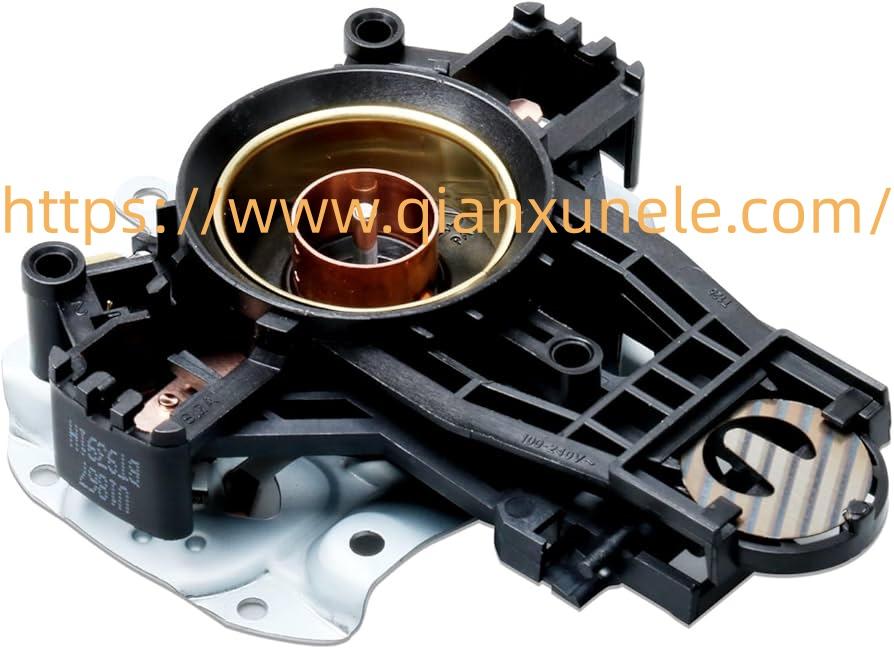
Strix Thermostat Switch selection should begin with the actual electrical and thermal requirements of the appliance. Buyers should examine rated voltage, current, operating temperature, protection temperature, mounting dimensions, contact configuration, and intended application before comparing suppliers. For products used in kettles, steam irons, and related heating appliances, the control component needs to correspond with the overall heating design and operating conditions. qianxunele provides related solutions for different appliance applications, allowing manufacturers to discuss specifications with a supplier.
Check the Electrical Conditions
Electrical compatibility should be reviewed before considering other specifications. Buyers need to identify rated voltage, current, frequency, contact resistance, insulation requirements, and withstand voltage for the finished appliance.
A suitable component should correspond with the electrical load and switching conditions expected during normal operation. Manufacturers should therefore provide actual appliance parameters when requesting samples or quotations.
For example, the QX188A and QX-H1 product information lists 250V rated voltage, 10A or 13A rated current, 50Hz or 60Hz frequency, and AC2500V one-minute withstand voltage. These figures should be compared with the requirements of the target product.
Review Temperature Settings
Temperature values should be evaluated according to the heating process rather than viewed as isolated numbers. Buyers should distinguish between normal operating temperature and protection temperature.
The normal setting should correspond with the intended heating cycle, while the protection point should provide an appropriate response when abnormal conditions occur.
The surrounding structure also matters. Position relative to the heating element, water chamber, steam channel, and housing can affect how heat reaches the sensing mechanism. The published QX188A and QX-H1 specifications list an operating temperature of 70 ± 5°C and a protection temperature of 130 ± 5°C.
Examine the Physical Structure
Electrical compatibility alone does not guarantee that a component will fit the finished appliance.
Before ordering, buyers should check mounting dimensions, hole positions, terminal locations, actuator direction, connection methods, and available installation space.
For OEM projects, drawings and samples are particularly useful. A supplier can assess the actual installation environment and determine whether the proposed structure matches the appliance design.
This step can also reduce changes during later assembly because mechanical interference can be identified before mass production.
Consider Steam Flow
For steam-producing appliances, the relationship between the sensing position and steam channel deserves careful attention.
Steam needs to reach the relevant sensing area in a suitable manner so that the switching process corresponds with the appliance heating cycle. The position of the component should therefore be evaluated together with the water chamber, heating element, steam passage, and surrounding housing.
The operating principle described by qianxunele involves steam reaching the sensing mechanism and triggering a mechanical response that interrupts power to the heating element.
Evaluate Contact Performance
Repeated switching places requirements on the electrical contacts. Buyers can ask about contact resistance, insulation resistance, withstand voltage, terminal materials, and connection construction.
These specifications become relevant when an appliance performs many heating cycles during its service life.
The published product information gives a contact resistance of no more than 50mΩ and insulation resistance of at least 100MΩ for the listed models. Such data can provide a useful reference during supplier comparison.
Consider Operating Life
Expected operating cycles should be discussed before finalizing a component. A kettle or steam appliance used frequently may experience many switching cycles over its working life.
The QX188A and QX-H1 specifications list an operating life of at least 10,000 cycles. Buyers should still evaluate this figure against their own appliance design, usage pattern, and testing requirements rather than treating it as a universal result for every application.
Sample testing can provide additional information about switching behavior, mechanical fit, temperature response, and electrical performance under actual appliance conditions.
Check Protection Functions
Protection functions are another important part of the selection process. Buyers should determine how the component responds when temperatures rise beyond the intended operating range.
The listed models include self-reset dry-burning protection. This function should be evaluated together with the appliance circuit, heating element, water level conditions, and other safety mechanisms.
Manufacturers should also confirm how the protection feature interacts with the complete appliance before moving into production.
Review Certification Requirements
Certification requirements depend on the destination market and finished appliance. Buyers should identify applicable standards before selecting a component.
Ask the supplier which certificates are available for the specific model and whether the documentation matches the intended market.
The product page lists CQC, TUV, CE, CB, and CCC certifications for the displayed models. Buyers should verify the exact certificate and model correspondence during procurement.
Discuss Samples and Customization
A useful supplier discussion should include appliance drawings, electrical parameters, operating temperatures, installation dimensions, expected switching cycles, and target market.
Sample testing can then focus on the actual product design. Engineers can evaluate mechanical fit, thermal response, electrical switching, and protection behavior before finalizing production arrangements.
qianxunele states that it supports customized non-standard products and provides design, research, development, production, and sales services for related components. This can be useful for manufacturers whose appliance structures require specific dimensions or operating parameters.
Connect Component Selection With Production
The final purchasing decision should consider more than a single specification. Buyers need to connect electrical ratings, temperature settings, mechanical dimensions, steam flow, contact performance, operating cycles, protection functions, certification, and testing requirements with the finished appliance.
Providing complete application information to the supplier can make technical discussions more efficient and help engineers evaluate the proposed configuration according to actual production conditions. Manufacturers interested in reviewing related appliance components and available configurations can visit the https://www.qianxunele.com/product/ This provides a starting point for discussing samples, specifications, customization, and production requirements before an order is finalized.

 English
 Arabic
 French
 Spanish
 Portuguese
 Deutsch
 Turkish
 Italiano
 Russian
 Romaian
 Portuguese (Brazil)
 Greek
Greek