
Best E-commerce Delivery Software in 2026: Features, Benefits & Top Solutions
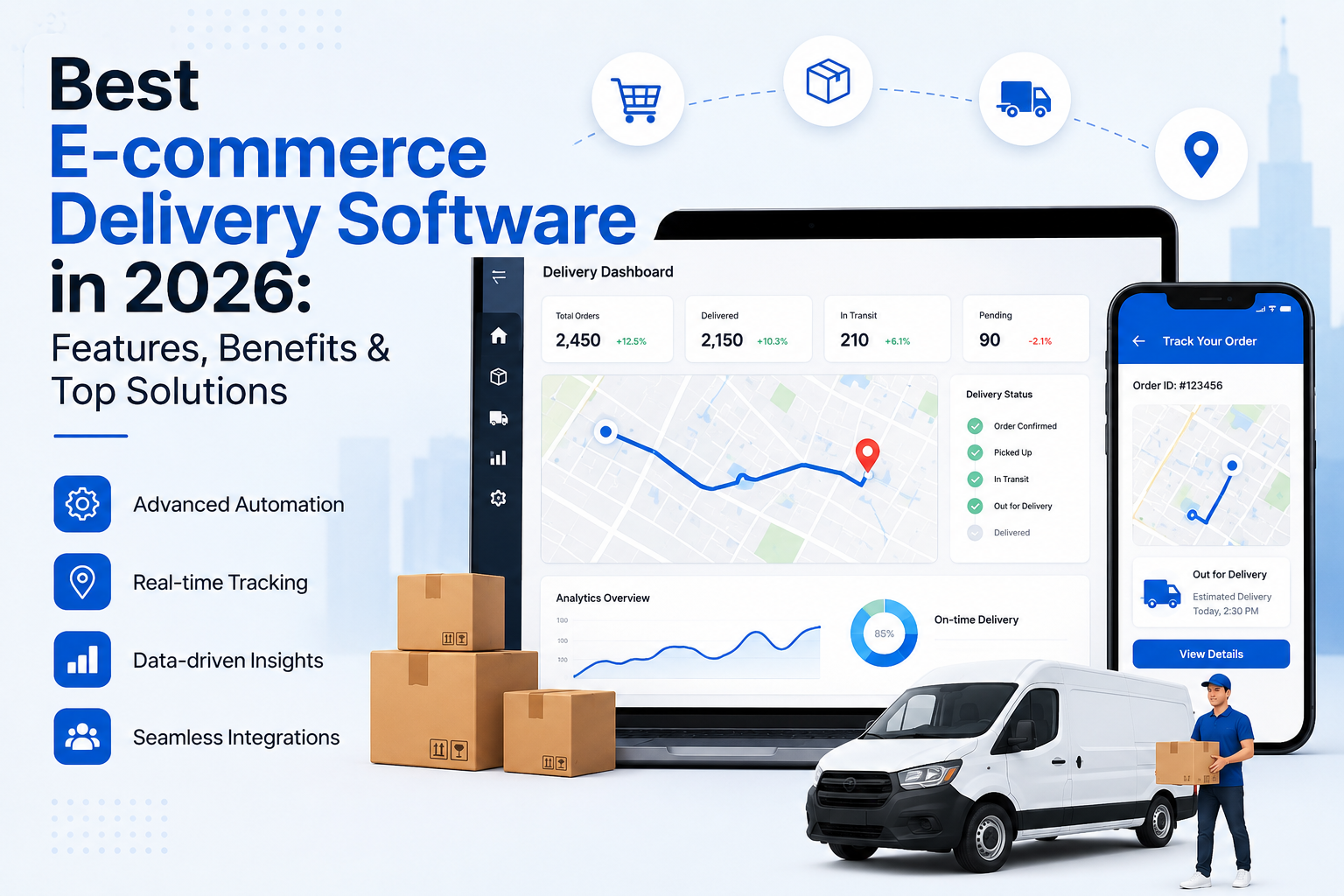
E-commerce has changed the way customers shop, but it has also changed what they expect from delivery services. Customers now want faster deliveries, accurate tracking, flexible delivery options, and regular shipment updates.
For e-commerce businesses, managing these expectations can become difficult when delivery operations are handled manually. As order volumes increase, logistics teams need to coordinate multiple drivers, routes, shipments, delivery locations, and customer requests at the same time.
This is where E-commerce Delivery Management Software becomes valuable.
A modern delivery management system helps businesses plan deliveries, optimize routes, track vehicles, manage drivers, automate proof of delivery, and provide real-time shipment visibility from a centralized platform.
In 2026, choosing the right e-commerce delivery software can help businesses improve last-mile efficiency, reduce delivery costs, and provide a better customer experience.
What Is E-commerce Delivery Software?
E-commerce delivery software is a digital solution designed to manage and optimize the complete delivery process, from order dispatch to final delivery. It connects different parts of the delivery operation, including dispatch teams, drivers, customers, warehouses, and logistics managers, helping businesses manage their delivery workflows from a centralized platform.
Depending on the business requirements, the software can manage delivery planning, order and shipment allocation, driver assignment, route optimization, real-time GPS tracking, last-mile delivery, digital proof of delivery, delivery notifications, failed delivery management, delivery analytics, and customer tracking.
Instead of relying on spreadsheets, phone calls, WhatsApp messages, and multiple disconnected tools, businesses can use one centralized system to monitor deliveries, coordinate drivers, track shipments, and improve overall delivery efficiency.
Why E-commerce Businesses Need Delivery Management Software
E-commerce delivery operations can become complicated very quickly. A business may need to deliver hundreds or thousands of orders across different locations every day.
Manual delivery management can create several problems:
-
Poor route planning
-
Delayed deliveries
-
High fuel consumption
-
Driver coordination issues
-
Limited shipment visibility
-
Failed deliveries
-
Customer complaints
-
Manual POD collection
-
Difficulty managing delivery costs
A delivery management system helps businesses automate repetitive tasks and improve visibility across the entire delivery process.
For growing e-commerce businesses, this can make it easier to handle higher order volumes without continuously increasing operational staff.
Key Features of the Best E-commerce Delivery Software
1. Real-Time Delivery Tracking
Businesses can monitor vehicle locations, shipment progress, and delivery status in real time. Customers can also receive live tracking updates. This improves visibility and reduces delivery-related queries.
2. Route Optimization
The software helps businesses plan efficient delivery routes based on delivery locations, vehicle availability, and other factors. This reduces unnecessary travel and fuel consumption. It also helps improve delivery times.
3. Automated Driver Assignment
Orders can be assigned to drivers based on availability, location, vehicle capacity, and delivery requirements. This makes dispatch planning faster and more organized. It also helps improve driver and vehicle utilization.
4. Driver Mobile Application
Drivers can access assigned deliveries, customer details, routes, and delivery instructions through a mobile app. They can update delivery status directly from the app. This improves communication between drivers and operations teams.
5. Digital Proof of Delivery
Drivers can collect signatures, photos, OTPs, GPS locations, and delivery timestamps digitally. This reduces paperwork and makes delivery records easier to manage. It can also help businesses process billing faster.
6. Delivery Notifications
Automated notifications keep customers informed about order dispatch, out-for-delivery status, and successful delivery. Customers get timely updates without contacting the support team. This improves transparency and overall customer experience.
7. Failed Delivery Management
The software records failed delivery attempts and their reasons. Operations teams can use this information to schedule delivery reattempts. This helps reduce repeated delivery failures and improve successful delivery rates.
8. Real-Time Alerts
The system provides alerts for important events such as route deviations, delivery delays, unauthorized stoppages, missed schedules, vehicle issues, and completed deliveries. These alerts help managers identify problems quickly and take timely action.
9. Delivery Analytics and Reporting
Delivery software provides reports on on-time deliveries, driver performance, route efficiency, failed deliveries, delivery costs, vehicle utilization, and customer performance. These insights help businesses identify operational issues and make better decisions.
Benefits of E-commerce Delivery Software
Faster Deliveries
Optimized routes, automated dispatching, and better driver coordination can help businesses improve delivery speed.
Lower Delivery Costs
Better route planning and vehicle utilization can reduce fuel consumption and unnecessary transportation expenses.
Improved Last-Mile Efficiency
The last mile is often one of the most expensive stages of the delivery process. Software helps businesses coordinate final-mile deliveries more efficiently.
Better Customer Experience
Customers receive accurate tracking information and delivery updates, creating greater transparency throughout the order journey.
Reduced Manual Work
Automation reduces repetitive tasks such as delivery assignment, status updates, reporting, and documentation.
Better Driver Productivity
Drivers receive clear delivery instructions and optimized routes through mobile applications, helping them complete more deliveries efficiently.
Faster Proof of Delivery
Digital POD reduces paperwork and makes completed delivery records immediately available to operations and accounts teams.
Improved Operational Visibility
Managers can monitor delivery operations in real time instead of relying on manual updates from drivers.
Easy Business Scalability
As order volumes increase, businesses can use technology to manage more deliveries without increasing administrative workload at the same rate.
Who Should Use E-commerce Delivery Software?
E-commerce delivery software can be useful for different types of businesses.
Online Retailers
Businesses selling products directly to customers can use delivery software to manage their own delivery operations.
E-commerce Logistics Companies
Logistics providers handling deliveries for multiple online businesses can use centralized software to manage large delivery volumes.
D2C Brands
Direct-to-consumer brands can improve shipment visibility and customer communication through automated delivery systems.
Warehouses and Fulfillment Centers
Fulfillment operations can use delivery software to coordinate shipments after orders are packed and ready for dispatch.
3PL Providers
Third-party logistics providers can manage deliveries for multiple clients through centralized transportation workflows.
How to Choose the Best E-commerce Delivery Software
Not every delivery management system will suit every business. Before selecting a solution, businesses should consider their order volume, fleet size, delivery locations, and operational requirements.
Important factors include:
Ease of Use
The software should be simple enough for dispatchers, managers, and drivers to use without extensive training.
Scalability
The system should support increasing order volumes and additional delivery locations as the business grows.
GPS and Tracking
Real-time GPS tracking should provide accurate vehicle and shipment visibility.
Integration Capabilities
The software should integrate with existing e-commerce platforms, ERP systems, billing software, and other logistics tools where required.
Mobile Support
A reliable driver application is important for real-time delivery updates and digital POD collection.
Reporting
Businesses should have access to useful dashboards and reports for monitoring delivery performance.
Customer Support
Reliable technical support is important because delivery operations run continuously and software issues can affect daily operations.
Top Solutions to Consider in 2026
When evaluating the best e-commerce delivery software, businesses should compare solutions based on their specific requirements rather than choosing only by brand name.
A strong delivery management solution should combine:
-
Real-time tracking
-
Route optimization
-
Driver management
-
Dispatch automation
-
Digital POD
-
Delivery notifications
-
Analytics
-
Customer visibility
-
Integration capabilities
For Indian logistics and e-commerce businesses, it is also useful to consider solutions that support local transportation requirements such as GST-related processes, E-Way Bills, and Indian logistics workflows.
Why LogiBrisk Is a Strong E-commerce Delivery Solution
LogiBrisk provides transportation and delivery management capabilities designed for Indian logistics businesses.
The platform helps businesses manage delivery operations, vehicle tracking, trip and dispatch management, route planning, digital POD, billing, and other transportation workflows from a centralized system.
For businesses managing e-commerce deliveries, LogiBrisk can help improve visibility across the delivery process and coordinate operations more efficiently.
Its broader Full Truckload Managеmеnt Softwarе capabilities also make it suitable for businesses that manage multiple logistics activities beyond last-mile delivery.
Future of E-commerce Delivery Management in 2026
E-commerce delivery operations are becoming increasingly technology-driven. Businesses are focusing not only on completing deliveries but also on improving delivery accuracy, cost efficiency, and customer experience.
Real-time tracking, automated route planning, digital documentation, data analytics, and intelligent delivery planning will continue to play an important role in modern logistics.
Businesses that invest in delivery technology can build more flexible operations and respond faster to changing customer expectations.
Conclusion
The best e-commerce delivery software is not simply a tool for tracking vehicles. It should help businesses manage the complete delivery workflow, from dispatch planning and driver assignment to route optimization, real-time tracking, digital POD, and performance analysis.
For growing e-commerce businesses, the right software can reduce delivery costs, improve operational visibility, increase driver productivity, and provide customers with a better delivery experience.
As e-commerce continues to expand in 2026, investing in a scalable and integrated delivery management system can help businesses build faster, more efficient, and more reliable last-mile delivery operations.

 English
 Arabic
 French
 Spanish
 Portuguese
 Deutsch
 Turkish
 Dutch
Dutch
 Italiano
 Russian
 Romaian
 Portuguese (Brazil)