
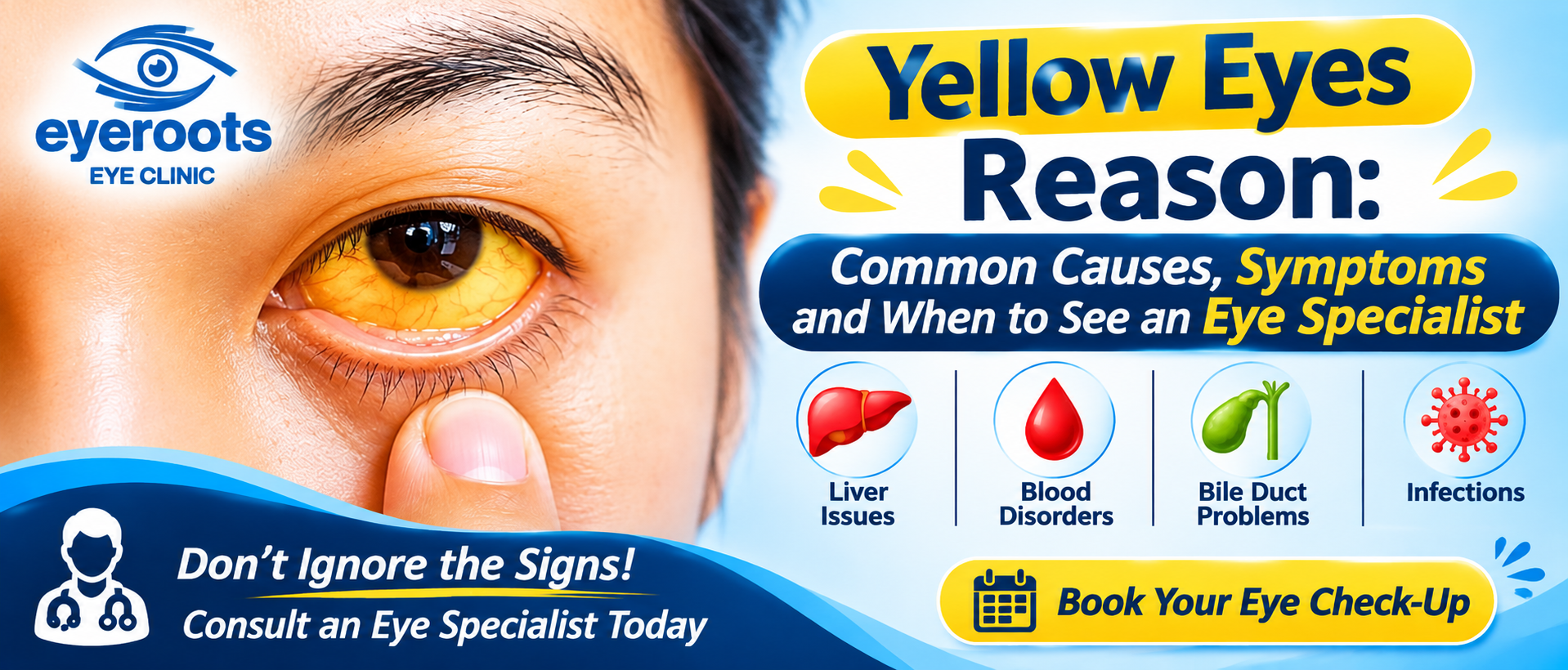
Yellow Eyes Reason: Common Causes, Symptoms and When to See an Eye Specialist

Have you noticed a yellowish appearance in the white part of your eyes? Yellow eyes can be a sign of an underlying health condition that should not be ignored. Understanding the yellow eyes reason is important because this change in eye colour may indicate problems related to the liver, gallbladder, blood or bile ducts.
Let's explore the common causes of yellow eyes, associated symptoms and when you should seek medical attention.
What Causes Yellow Eyes?
The yellow appearance of the eyes is commonly associated with a condition called jaundice. It occurs when bilirubin, a yellow pigment produced during the breakdown of red blood cells, builds up in the bloodstream.
Normally, the liver processes bilirubin and helps remove it from the body. However, when this process is affected, bilirubin levels may increase and cause the whites of the eyes to turn yellow.
Common Reasons Behind Yellow Eyes
Several medical conditions can contribute to yellowing of the eyes. Some common causes include:
1. Liver Problems: Conditions such as hepatitis, fatty liver disease and liver damage can affect the liver's ability to process bilirubin, resulting in yellow eyes.
2. Jaundice: Jaundice is one of the most common reasons for yellow eyes. It may also cause yellowing of the skin, dark urine and pale stools.
3. Gallbladder Problems: Gallstones or bile duct blockages can prevent bilirubin from leaving the body properly, leading to yellow discolouration.
4. Blood Disorders: Certain conditions that cause excessive breakdown of red blood cells can increase bilirubin levels and contribute to jaundice.
5. Pancreatic Conditions: Problems affecting the pancreas may sometimes block the bile duct and cause yellowing of the eyes.
Symptoms That May Accompany Yellow Eyes
Yellow eyes may occur alongside other symptoms depending on the underlying cause. Watch for:
-
Yellowing of the skin
-
Dark-coloured urine
-
Pale or clay-coloured stools
-
Abdominal pain or discomfort
-
Unusual tiredness and weakness
-
Nausea or vomiting
-
Loss of appetite
-
Itching across the body
If you notice yellowing of your eyes, seek prompt medical evaluation rather than waiting for the symptoms to disappear.
When Should You Consult a Doctor?
Yellowing of the whites of your eyes should always be medically assessed, even if there is no pain. A healthcare professional may recommend blood tests, liver function tests, ultrasound or other investigations to identify the underlying cause.
Seek urgent medical attention if yellow eyes are accompanied by severe abdominal pain, fever, confusion or repeated vomiting.
How Can You Maintain Good Eye Health?
Although yellow eyes are often linked to internal health conditions rather than eye diseases, maintaining overall health is important. Schedule regular health check-ups, maintain a balanced diet, stay hydrated and avoid self-medication.
For more information about yellow eyes, their causes and available treatment options, visit Eyeroots Clinic.
Conclusion
Understanding the yellow eyes reason can help you recognise possible health concerns at an early stage. Since yellow eyes may indicate jaundice or other underlying medical conditions, timely diagnosis is essential. Never ignore unusual changes in eye colour. Consult a qualified healthcare professional to identify the cause and receive appropriate treatment.