
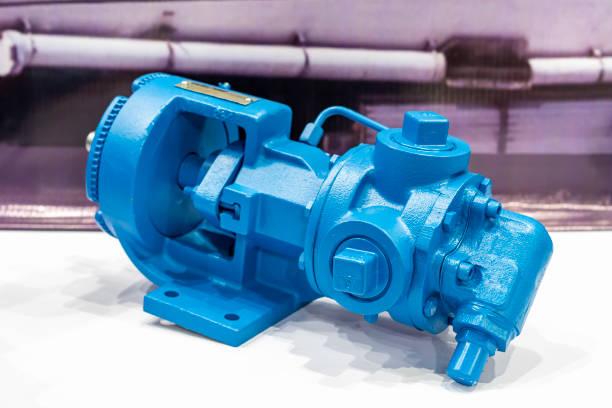
How Are Positive Displacement Pumps Improving Industrial Fluid Handling?

Positive displacement pumps have become essential across industries that require accurate, consistent, and reliable fluid transfer. Unlike centrifugal pumps, these pumps move a fixed volume of fluid with each operating cycle, making them highly effective for handling viscous liquids, chemicals, slurries, oils, food products, pharmaceuticals, and wastewater. As industries continue focusing on process efficiency, precision, and operational reliability, demand for advanced positive displacement pumps is steadily increasing across global markets.
According to a Vyansa Intelligence report, the Positive Displacement Pump Market was valued at USD 11.41 Billion in 2025 and is projected to reach USD 13.84 Billion by 2032, registering a CAGR of 2.8% during the 2026–2032 forecast period. Growing industrial automation, expanding process industries, and increasing investment in water infrastructure continue to support long-term market development.
Process Industries Continue to Drive Pump Adoption
Industries such as chemicals, oil and gas, pharmaceuticals, food and beverages, pulp and paper, and wastewater treatment require pumping systems capable of maintaining precise flow rates regardless of pressure variations. Positive displacement pumps are widely preferred for these demanding applications due to their accuracy and reliability.
According to this positive displacement pump industry report, gear pumps, diaphragm pumps, piston pumps, rotary lobe pumps, peristaltic pumps, and screw pumps are increasingly adopted for handling fluids with varying viscosities and challenging operating conditions. Their ability to deliver consistent flow while minimizing product degradation makes them suitable for a wide range of industrial processes.
As industrial production expands globally, demand for reliable fluid handling equipment is expected to remain strong.
Oil and Gas Industry Remains a Major End User
The oil and gas sector continues to rely heavily on positive displacement pumps for upstream, midstream, and downstream operations. These pumps are used for crude oil transfer, chemical injection, lubrication systems, fuel handling, and refinery operations where precise flow control is essential.
Industry analysis indicates that positive displacement pumps offer excellent performance when transporting highly viscous fluids under high-pressure conditions. Their durability and operational reliability help improve process efficiency while reducing maintenance requirements in demanding industrial environments.
Continued investment in energy infrastructure is expected to sustain long-term demand across the sector.
Water and Wastewater Treatment Is Expanding Market Opportunities
Water treatment facilities increasingly require pumping systems capable of handling sludge, chemicals, and dosing applications with high accuracy. Positive displacement pumps play an important role in municipal and industrial wastewater treatment by ensuring consistent chemical dosing and efficient fluid movement.
Detailed market insights suggest that diaphragm and progressive cavity pumps are widely used for sludge transfer, polymer dosing, and wastewater processing because they can efficiently handle abrasive and high-viscosity materials. Their precise flow control also improves treatment efficiency while reducing operational waste.
Growing investment in sustainable water management continues creating opportunities for pump manufacturers. The U.S. Environmental Protection Agency (EPA) water resources highlight the importance of effective water management, treatment, and infrastructure development for improving environmental performance.
Food and Pharmaceutical Industries Demand High Precision
Food processing and pharmaceutical manufacturing require hygienic pumping solutions that preserve product quality while meeting strict regulatory standards. Positive displacement pumps are designed to transfer sensitive products with minimal shear, making them ideal for handling dairy products, beverages, syrups, cosmetics, and pharmaceutical ingredients.
The latest market analysis highlights that sanitary rotary lobe pumps and peristaltic pumps help maintain product integrity while supporting clean-in-place (CIP) and sterilize-in-place (SIP) processes. These capabilities improve production efficiency while ensuring compliance with quality and safety regulations.
The continued expansion of hygienic manufacturing industries is strengthening demand for advanced pumping technologies.
Automation Is Improving Operational Efficiency
Industrial automation is transforming fluid handling systems through the integration of smart monitoring technologies, variable speed drives, and digital process controls. Modern positive displacement pumps increasingly incorporate sensors that provide real-time operational data.
Research findings indicate that predictive maintenance, remote monitoring, and automated flow control improve equipment reliability while reducing unexpected downtime. Digital monitoring systems also optimize energy consumption and maintenance scheduling, helping industries improve operational performance and lower lifecycle costs.
Smart pumping technologies are becoming an important differentiator within the industry. The Hydraulic Institute resources provide industry guidance and technical information supporting advancements in pumping system performance and efficiency.
Sustainability Is Encouraging Energy-Efficient Pump Solutions
Industries worldwide are focusing on reducing energy consumption and improving environmental performance. Manufacturers are responding by developing positive displacement pumps with energy-efficient motors, optimized hydraulic designs, and durable materials that extend equipment lifespan.
The comprehensive report suggests that efficient pumping systems help reduce electricity consumption, minimize fluid waste, and improve resource utilization across industrial operations. These advantages align with growing sustainability initiatives and stricter environmental regulations across multiple industries.
Investment in energy-efficient equipment is expected to continue supporting long-term market growth.
Future Perspective
The positive displacement pump industry is expected to maintain steady expansion as industrial automation, water infrastructure development, and process optimization continue driving equipment demand. Growing adoption across oil and gas, chemicals, food processing, pharmaceuticals, and wastewater treatment will further strengthen opportunities for manufacturers.
The industry outlook indicates that positive displacement pumps will remain essential for ensuring accurate fluid handling, improving process efficiency, and supporting reliable industrial operations worldwide. Continued advancements in intelligent monitoring, energy-efficient designs, corrosion-resistant materials, and digital automation are expected to create long-term opportunities across the global industrial equipment sector.


