
How Are Agricultural Service Providers Supporting Machinery Adoption Among Smallholders?

Agriculture across Southeast Asia is shaped by diverse farming systems, ranging from smallholder rice cultivation and plantation operations to commercial production of vegetables, sugarcane, and other crops. Despite differences in farm structures and national development priorities, producers across the region face a common operational challenge: improving productivity while managing labour availability, production costs, and increasingly demanding food supply requirements. Agricultural machinery is therefore becoming an important part of efforts to strengthen farm efficiency and improve the reliability of cultivation and harvesting activities.
According to a Vyansa Intelligence report, the Southeast Asia Agricultural Machinery Market was valued at USD 4.7 Billion in 2025 and is projected to reach USD 7.87 Billion by 2032, registering a CAGR of 7.64% during 2026-2032. This expansion reflects the growing role of mechanised equipment in supporting farm operations, reducing dependence on manual work, and improving the consistency of agricultural production. The region's demand profile is also influenced by differences in landholding patterns, crop requirements, machinery affordability, and access to equipment services.
Mechanisation Is Becoming Central to Farm Productivity
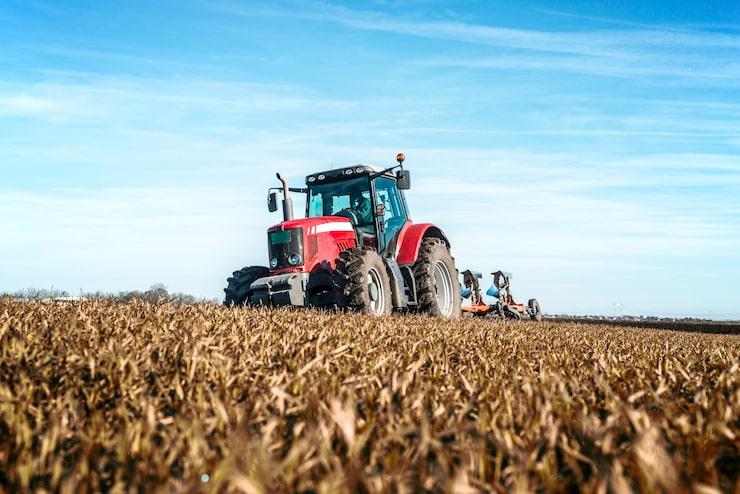
Agricultural mechanisation supports several stages of the farming cycle, including land preparation, planting, irrigation, crop maintenance, harvesting, and post-harvest handling. Tractors, tillers, seeders, harvesters, sprayers, and irrigation equipment help farmers complete time-sensitive activities with greater operational consistency. Their relevance is particularly significant in labour-intensive farming systems, where delays in field preparation or harvesting can affect crop quality and production efficiency.
Across Southeast Asia, machinery requirements vary according to crop type and farm scale. Rice cultivation creates demand for equipment suited to wet-field operations, planting, harvesting, and threshing. Plantation agriculture requires machinery capable of operating across larger cultivation areas, while horticulture and vegetable production depend on adaptable equipment for soil preparation, spraying, and irrigation.
In this report, mechanisation demand can be understood through the relationship between equipment ownership and practical access. Smallholder farmers may not have the financial capacity or operational need to purchase every machine independently. This creates opportunities for rental services, machinery contractors, cooperatives, and shared-equipment arrangements that distribute acquisition and maintenance costs across multiple users.
Smallholder Requirements Are Shaping Equipment Demand
The structure of Southeast Asian agriculture makes affordability and equipment suitability important purchasing considerations. Small and fragmented landholdings can limit the utilisation of large machinery, particularly where field access, terrain, or cultivation practices restrict equipment movement. Farmers therefore require machinery that matches their operational scale, crop characteristics, and available maintenance infrastructure.
Compact tractors, power tillers, lightweight implements, and multipurpose machines can address these requirements by supporting several field activities without requiring large-scale equipment investment. Manufacturers and distributors that offer adaptable product configurations, accessible spare parts, operator training, and dependable servicing can strengthen their position in these customer segments.
According to this industry report, equipment adoption is not determined solely by machinery performance. The availability of financing, after-sales support, replacement components, and trained operators also affects the practical value of mechanisation. Equipment suppliers must therefore consider the broader ownership experience rather than focusing exclusively on initial sales.
Technology Is Extending the Role of Agricultural Machinery
The integration of digital technologies is gradually changing how agricultural equipment is used and managed. GPS-assisted guidance, sensors, automated controls, drones, and data-enabled monitoring can support more precise field operations. These technologies help farmers improve input application, monitor crop conditions, and coordinate machinery use across different production stages.
However, technology adoption needs to reflect local operating conditions. High equipment costs, limited digital infrastructure, connectivity constraints, and shortages of technical expertise can restrict the adoption of advanced systems among smaller farms. As a result, machinery with practical automation features and manageable operating requirements may have broader commercial relevance than complex systems that require substantial technical support.
Latest market analysis points towards an equipment landscape in which conventional machinery and digital capabilities are increasingly complementary. Rather than replacing established equipment categories immediately, technology integration can improve the productivity and usability of tractors, irrigation systems, sprayers, and harvesting machinery.
Regional Policies and Institutional Support Matter
Public-sector initiatives can influence mechanisation through equipment financing, agricultural extension, training programmes, infrastructure investment, and procurement support. Their effectiveness depends on whether machinery reaches farmers with suitable operating conditions and whether the supporting service network remains accessible after acquisition.
The Asian Development Bank's research on smallholder agricultural mechanisation highlights the importance of practical access models, including machinery ownership, rental, and service provision. It also examines how mechanisation can affect productivity, labour allocation, farm profitability, and rural livelihoods. These considerations are relevant to Southeast Asia, where farm structures and financial capabilities vary considerably across countries.
Industry analysis also needs to account for the difference between machinery distribution and sustained equipment utilisation. Equipment programmes are more likely to deliver operational benefits when farmers can access trained operators, spare parts, repair services, and machinery suited to local crops and field conditions.
Opportunities and Challenges for Equipment Suppliers
The expanding requirement for farm productivity creates opportunities across tractors, harvesting machinery, planting equipment, irrigation systems, and crop-care technologies. Suppliers can strengthen demand by developing products for different farm sizes, supporting local distribution networks, and working with machinery rental providers. Equipment leasing and contractor-based services can also help address affordability constraints without requiring every farmer to purchase machinery independently.
Nevertheless, several challenges may influence adoption. Limited purchasing power, fragmented landholdings, uneven rural infrastructure, and maintenance constraints can delay investment decisions. Machinery designed for one country's farming conditions may also require adaptation before it can serve another country's crops, terrain, or operating practices.
A Market research report perspective therefore needs to consider not only equipment availability but also the commercial and operational ecosystem surrounding machinery use. Detailed market insights indicate that long-term demand will depend on the ability of manufacturers, distributors, financial institutions, and agricultural service providers to make mechanisation accessible and economically practical.
What Could Shape the Next Phase of Mechanisation?
The future direction of agricultural machinery demand across Southeast Asia will depend on how effectively equipment suppliers respond to the region's varied agricultural requirements. Demand is likely to reflect a combination of farm modernisation, labour efficiency priorities, crop-specific equipment needs, and wider access to machinery services.
Manufacturers that combine durable equipment, adaptable configurations, accessible maintenance, and practical technology features will be better positioned to address these requirements. Shared machinery models can also expand equipment access among smallholders while supporting higher utilisation rates for service providers.
The sector's development will ultimately depend on connecting machinery innovation with the realities of farm operations. As agricultural producers seek more reliable and efficient cultivation systems, mechanisation is positioned to remain an important component of Southeast Asia's agricultural modernisation.


