
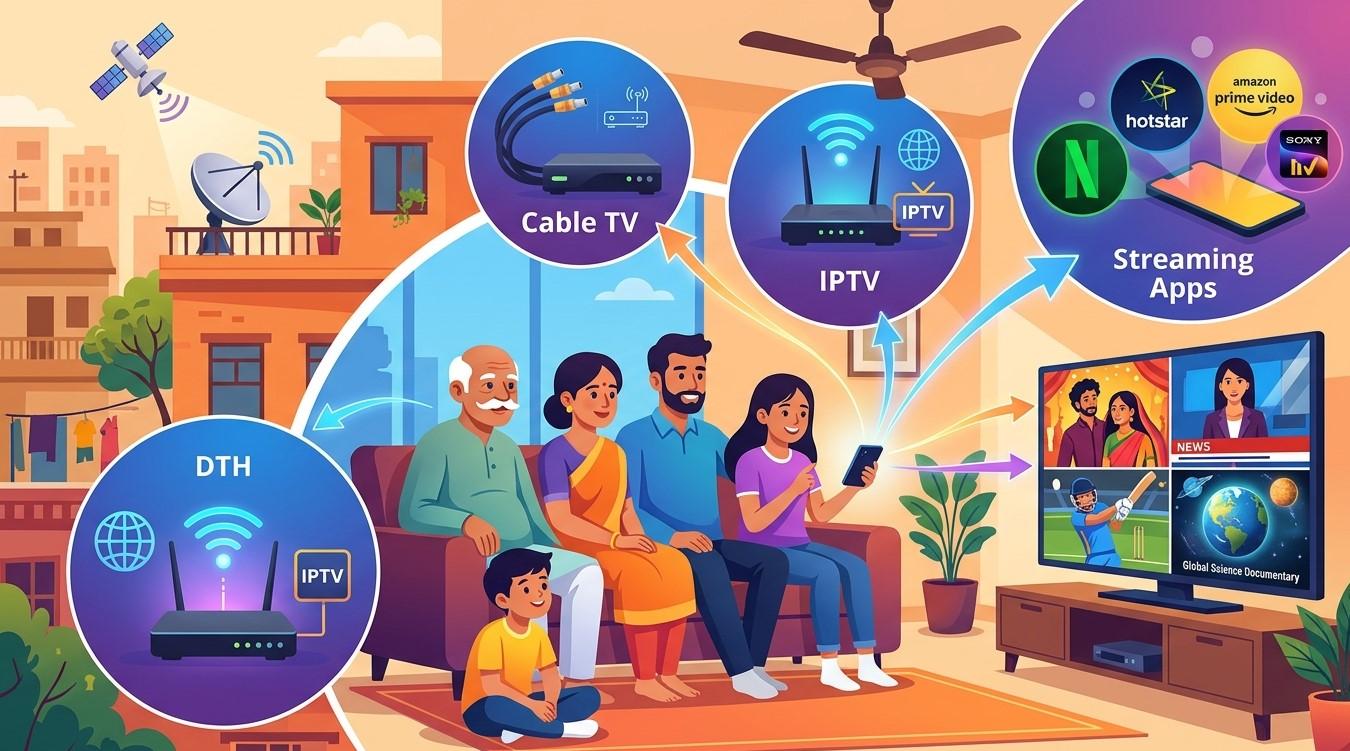
How People in India Watch TV (DTH, Cable, IPTV, and Streaming Apps) and Why It Affects What Your Relatives See

Television remains an important part of everyday life in India, bringing families together for news, entertainment, movies, sports, and regional programming. However, not everyone watches television through the same technology. Some households use traditional cable connections, others subscribe to DTH services, while many have moved toward internet-based television and streaming apps.
These different viewing methods can affect which channels, programs, and features relatives can access. Understanding how each option works also helps families choose suitable entertainment arrangements. Whether you are comparing services or helping relatives stay connected with Indian television, understanding IPTV India and an Indian IPTV Box can help you explore modern television options.
Table of Contents
-
How People in India Watch Television
-
Understanding the Main TV Options
-
Why Relatives May See Different Channels
-
Factors That Affect the Viewing Experience
-
How Families Can Choose the Right Option
-
Frequently Asked Questions
1. How People in India Watch Television
Indian households use several technologies to access television content. The choice often depends on location, internet availability, household budget, preferred channels, and personal viewing habits.
For example, a family in a rural area may rely on DTH because satellite coverage is convenient, while someone living in a city may prefer cable or streaming apps. Other households combine traditional television services with internet-based platforms to access a wider variety of content.
2. Understanding the Main TV Options
DTH (Direct-to-Home)
DTH services deliver television channels directly to a household through a satellite dish and set-top box.
Key features:
-
Access to national and regional television channels.
-
Different subscription packages and channel selections.
-
No requirement for a home broadband connection.
-
Availability in many urban and rural locations.
DTH can be a practical option for households that want traditional live television without depending on internet connectivity.
Cable Television
Cable TV delivers channels through a wired cable network connected to a television or set-top box.
Key features:
-
Local and regional channel packages.
-
Familiar channel-number arrangements.
-
Subscription options managed by local cable operators.
-
Internet access is not necessarily required.
Channel availability and service quality can vary depending on the cable operator and location.
IPTV (Internet Protocol Television)
IPTV delivers television content through an internet connection using compatible applications or devices.
Key features:
-
Internet-based live television and, depending on the service, on-demand content.
-
Compatibility with supported smart TVs, streaming devices, and IPTV boxes.
-
Potential access to different channel categories and viewing features.
-
Service quality influenced by internet speed and network stability.
Viewers should choose legitimate IPTV providers that have the necessary rights to distribute their content.
Streaming Apps
Streaming applications provide movies, television shows, sports, and other content over the internet. Some focus on on-demand entertainment, while others offer live channels.
Key features:
-
Content available through supported mobile devices and televisions.
-
Individual subscriptions or free, ad-supported options.
-
Personalized recommendations and watchlists.
-
Different content libraries depending on the platform and subscription.
3. Why Relatives May See Different Channels
Two relatives living in different Indian cities may not receive exactly the same television lineup.
Several factors explain these differences:
-
Location: Regional channels and local cable packages can differ by state or city.
-
Subscription: Different packages may include different channels.
-
Platform: DTH, cable, IPTV, and streaming apps have different content arrangements.
-
Language preferences: Some households prioritize Hindi, while others prefer Tamil, Telugu, Bengali, Malayalam, or other regional programming.
-
Broadcast rights: Certain programs, movies, and sporting events may only be available through specific authorized platforms.
As a result, one relative might watch a particular regional news channel while another cannot find it in their subscription.
4. Factors That Affect the Viewing Experience
Even when relatives use the same television platform, their experiences may differ.
Internet quality: IPTV and streaming apps depend on stable internet connectivity. Slow speeds or network congestion can cause buffering.
Device compatibility: Older televisions may not support newer streaming applications or video formats.
Subscription restrictions: Some services limit simultaneous streams or restrict content by location.
Regional availability: Licensing arrangements can affect which programs are available in different areas.
Time differences: Relatives living outside India may watch recorded programs or streams at different times because of time zones and platform availability.
5. How Families Can Choose the Right Option
Before selecting a television service, consider the household's viewing habits and technical requirements.
-
Choose DTH if satellite-based live television is preferred.
-
Consider cable for familiar local and regional channel packages.
-
Explore authorized IPTV services for internet-based television features.
-
Use streaming apps for movies, series, and other on-demand entertainment.
-
Check channel lists, subscription conditions, device compatibility, and simultaneous-streaming limits before paying.
Families can also combine services when one platform does not provide all their preferred content.
Frequently Asked Questions
1. Is DTH better than IPTV in India?
Neither option is universally better. DTH does not require broadband, while IPTV depends on internet connectivity and may offer additional digital viewing features.
2. Can two relatives in India receive different channel lists?
Yes. Their locations, subscriptions, service providers, and regional channel packages may affect availability.
3. Does IPTV require high-speed internet?
A stable connection is important. The required speed depends on video resolution, the number of simultaneous streams, and the provider's recommendations.
4. Can I watch Indian television outside India?
Some authorized services offer international access, but availability depends on licensing, location restrictions, and subscription terms.
5. Can I use streaming apps and DTH together?
Yes. Many households use DTH for traditional live television and streaming apps for movies, series, and additional entertainment.
Conclusion and Call to Action
India's television landscape includes DTH, cable, IPTV, and streaming applications, each offering different benefits and limitations. These differences explain why relatives may receive different channels or have different viewing experiences, even when they enjoy similar programs.
Before choosing a service, compare its channel selection, regional availability, subscription terms, and device compatibility. Explore IPTV India and learn more about an Indian IPTV Box to understand available internet-based television options and make a more informed viewing decision.


