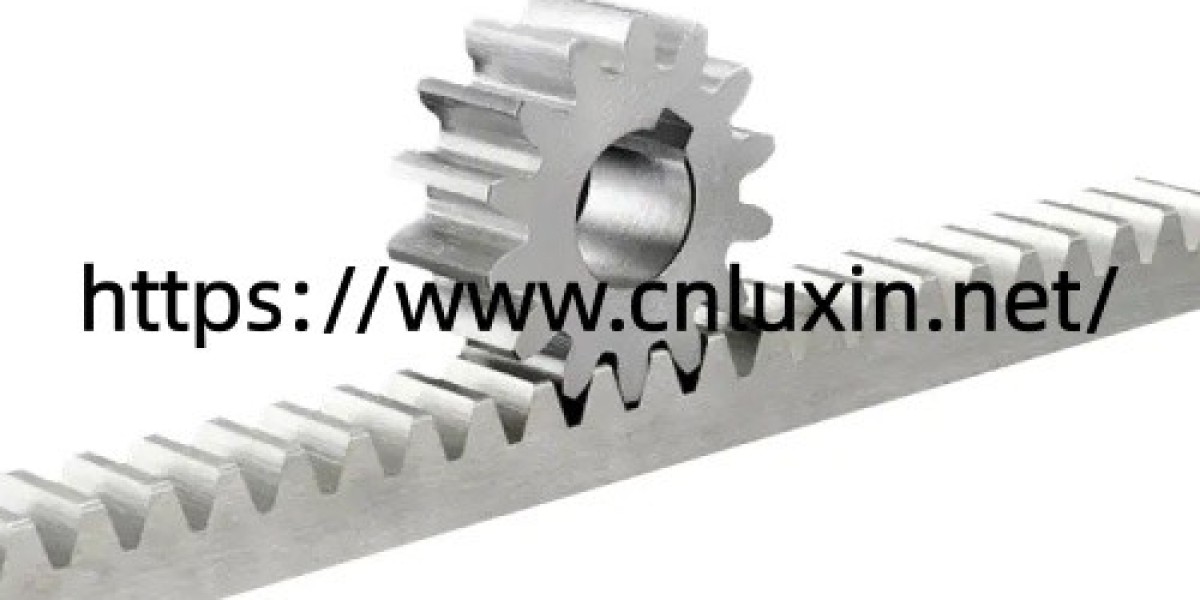

Custom Gear specifications play an important role in machine performance because every dimensional detail affects how a mechanical transmission fits, moves, and interacts with connected components. Buyers often focus on material or appearance when selecting a supplier, yet the technical information behind a component can have a much greater influence on actual operation. Tooth geometry, pitch, bore size, tolerance, material, heat treatment, and mounting dimensions all need to match the equipment application. Clear specifications also help manufacturers reduce assumptions during production and inspection.
One important factor is dimensional compatibility. A component may look suitable on paper but still create installation problems if the bore, keyway, mounting surface, or center distance does not correspond with the surrounding assembly. Even a small dimensional difference can affect alignment between connected parts. For this reason, buyers should provide complete drawings whenever possible. When a drawing is unavailable, a physical sample, photographs, measurements, and information about mating components can give a manufacturer useful references for technical evaluation.
Tooth geometry also deserves careful attention. The number of teeth, module or diametral pitch, pressure angle, helix angle, tooth profile, and pitch diameter can influence how two mating elements transfer movement. These values are connected, so changing one specification may require other dimensions to be reviewed. A design intended for smooth motion may require different parameters from one intended for a compact transmission or a system carrying repeated mechanical loads.
Tolerance is another specification that should be discussed according to the actual application. Tighter tolerances can require additional machining, grinding, inspection, or process control. However, specifying unnecessarily tight limits may increase production requirements without providing a useful benefit for the equipment. Recent manufacturing guidance also emphasizes matching tolerance requirements with functional needs such as backlash, transmission accuracy, noise, and dimensional fit.
Material selection affects how a component responds to working conditions. Different machinery may involve repeated loads, changing temperatures, moisture, dust, vibration, or continuous movement. Steel grades and other engineering materials can provide different combinations of machinability, hardness, wear resistance, and structural behavior. The correct selection should therefore begin with the operating environment rather than simply choosing a familiar material.
Heat treatment can also be relevant when the working surface requires additional hardness or durability. Processes such as carburizing, hardening, or other treatments may change the mechanical properties of the finished component. Since treatment can also influence dimensions, manufacturers need to understand which surfaces and measurements are critical before production begins. Post treatment machining or grinding may be considered where the application requires tighter dimensional control.
The connection between the component and its mating part should receive equal attention. For systems using a Precision Gear Rack tooth compatibility, mounting alignment, pitch requirements, and movement direction need to be considered together. The rack and mating element must work as a coordinated mechanical set rather than as isolated parts. This is particularly relevant in automated machinery, linear movement systems, positioning equipment, and industrial transmission assemblies.
Inspection requirements should also be defined before manufacturing starts. Buyers may need dimensional checks, tooth profile verification, runout measurement, surface inspection, material certification, or other quality records depending on the application. Providing these requirements early gives the manufacturer a clearer production target. It also makes communication easier when samples or trial batches need to be reviewed.
Cnluxin works with customers by focusing on practical manufacturing information and application requirements. A useful project discussion can begin with a drawing, sample, technical specification, or basic equipment information. From there, important details such as dimensions, material, treatment, quantity, and inspection requirements can be reviewed before production. This approach helps connect the requested component with the actual mechanical environment where it will be installed.
For buyers preparing a new project, a simple checklist can make communication more efficient. Include the required dimensions, tooth information, material, heat treatment, tolerance range, mounting details, operating conditions, quantity, and inspection expectations. If any value is uncertain, providing information about the machine and mating components can help the manufacturer assess what additional details may be needed.
Cnluxin provides product solutions for customers seeking components suited to specific machinery requirements. Buyers can review available products, technical options, and application related information through https://www.cnluxin.net/product/