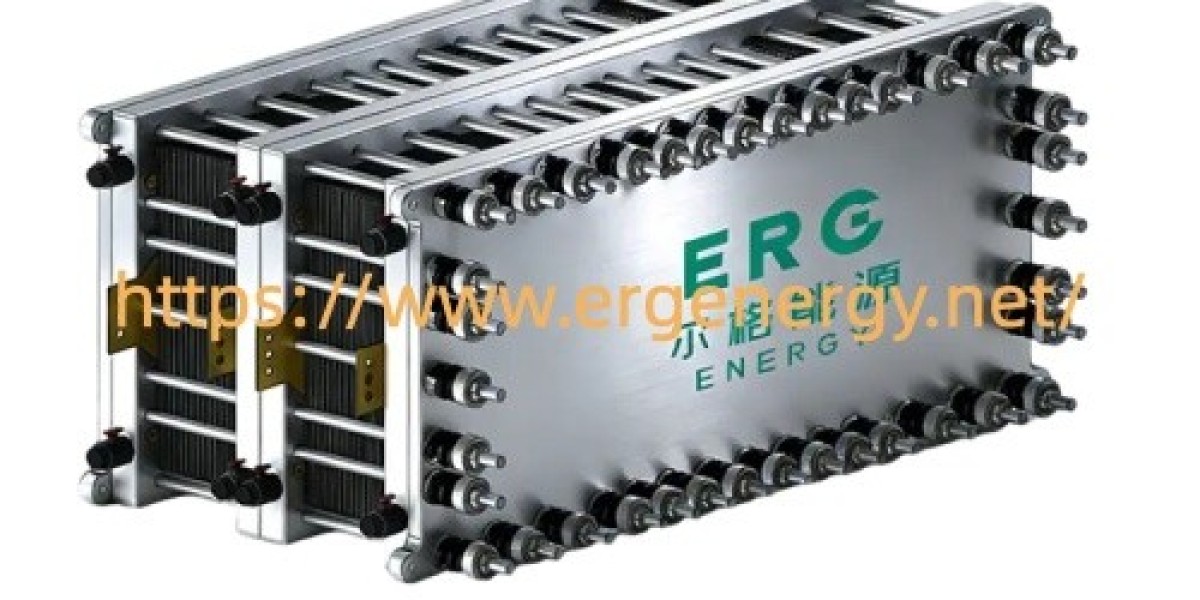

High-Capacity Vanadium Flow Battery Stacks rely on several interconnected elements that determine how effectively they convert and hold electrical energy over extended periods. Engineers and project planners examine these elements closely when matching units to specific storage needs in renewable and grid support roles.
One primary element involves the quality and structure of the ion exchange barrier that separates the two electrolyte streams. A well formed barrier permits selective ion movement while limiting unwanted crossover that can reduce available capacity over repeated cycles. Thickness uniformity and chemical resistance of this barrier help maintain stable voltage profiles during both charge and discharge phases.
Electrode composition forms another critical element. Porous media with suitable surface area and conductivity allow efficient electron transfer at the reaction sites. The choice of carbon based materials and any surface treatments influence reaction kinetics and help keep polarization losses within acceptable limits. Proper compression and contact with adjacent conductive plates further support even current distribution across the active area.
Liquid distribution patterns inside each cell also shape overall results. Channels designed for uniform delivery of electrolyte reduce dead zones and ensure active species reach the electrode surfaces consistently. Pressure drop across the assembly must stay manageable so that pumping energy does not offset the gains from improved reaction rates. Computational modeling often guides the layout of these channels before physical prototypes are built and tested.
Temperature management contributes significantly to stable operation. The aqueous nature of the electrolyte provides a natural thermal buffer yet external conditions can still push the system toward precipitation or accelerated side reactions if ranges are exceeded. Active or passive cooling strategies keep the working fluid within preferred windows and protect long term material integrity.
Electrolyte formulation and purity levels affect both energy density and cycle consistency. Concentration of the active ions solubility enhancers and impurity control determine how much energy can be stored per unit volume and how little capacity fade occurs after thousands of cycles. Regular monitoring of oxidation states allows operators to rebalance the two sides when needed and restore original performance characteristics.
Sealing methods and mechanical compression of the assembled cells influence durability under continuous vibration or thermal expansion. Robust gaskets and controlled clamping force prevent external leaks and maintain internal contact pressures that support low resistance pathways. These mechanical details often decide whether a unit continues to meet design targets after years of field service.
Current density selection during operation creates a practical trade off between power delivery and efficiency. Higher densities increase instantaneous output yet raise internal losses while lower densities favor higher round trip values at the expense of larger physical footprints for the same power rating. Operators typically define operating windows based on the duty cycle expected from the paired generation source.
System level integration adds further layers. Matching the assembly size to tank volumes allows independent scaling of power and energy which remains a distinctive feature of this technology class. Control algorithms that adjust pump speeds and monitor cell voltages in real time help the entire installation respond smoothly to changing grid signals or renewable output fluctuations.
Ergenergy designs its assemblies with attention to these same elements so that customers receive units ready for straightforward incorporation into larger storage plants. Field data from early installations confirm that careful attention to barrier quality electrode preparation and distribution geometry yields predictable results across varied climates and load profiles.
When project teams evaluate options they often request detailed performance maps that show efficiency across temperature current and state of charge ranges. Such maps reveal how each design choice translates into measurable outcomes and guide final sizing decisions. Routine inspection protocols focused on electrolyte condition and mechanical integrity further protect the investment over multi decade service horizons.
Taken together these factors membrane integrity electrode characteristics liquid pathways thermal control electrolyte quality mechanical sealing and operational settings create a clear framework for assessing any given assembly. Attention to each item supports reliable contribution to renewable firming peak shifting and industrial backup duties without introducing unnecessary complexity.
Project developers seeking practical solutions can review available configurations and supporting data at https://www.ergenergy.net/product/ to match specific site requirements with suitable assembly sizes and features.